
Ep. 92
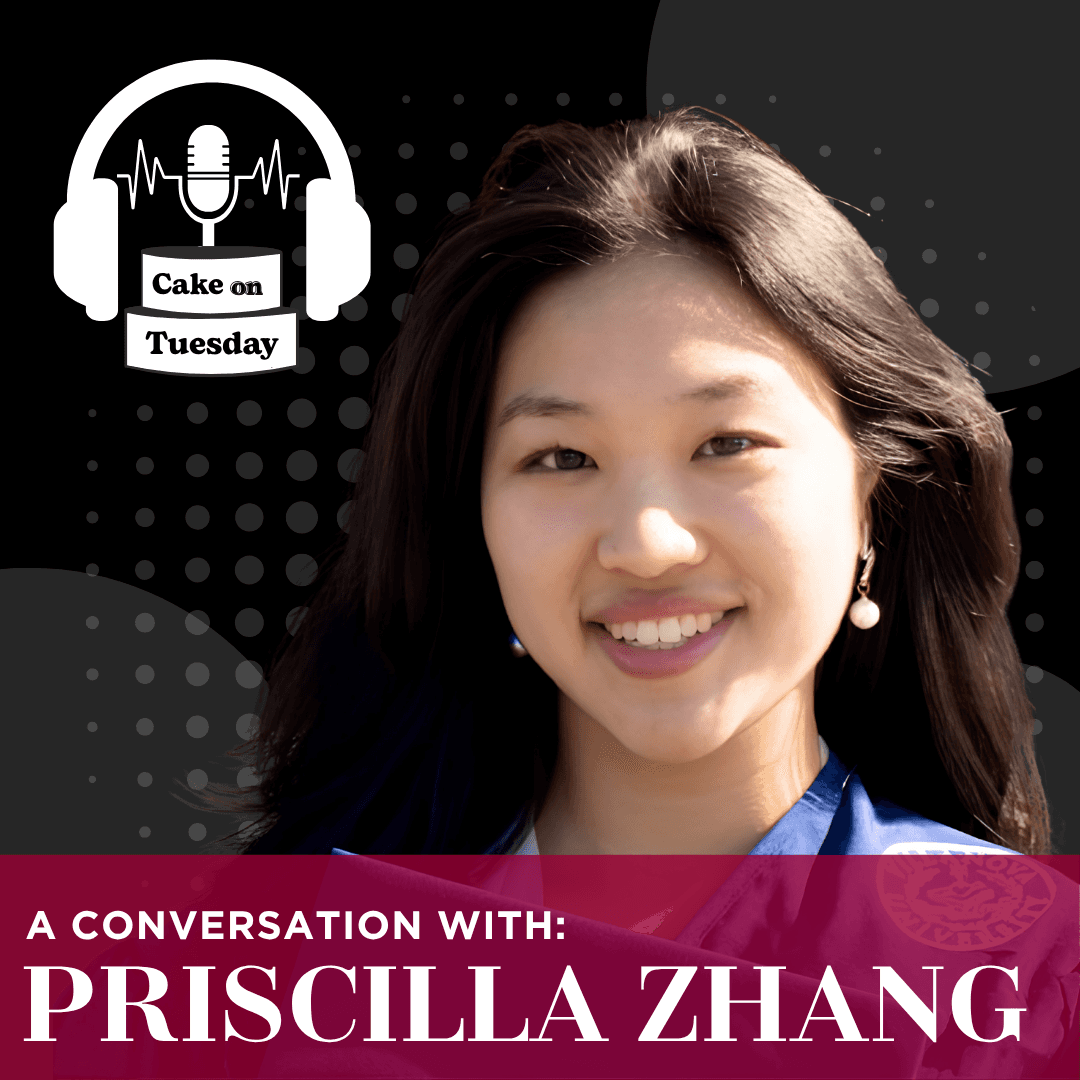
Priscilla Zhang
Co-Founder & CEO, Assistivity LLC
Priscilla Zhang is co-founder and CEO of Assistivity LLC, the company behind Phoenix, a voice-to-equation editor built for STEM students. Chronic wrist pain once forced her to withdraw from three courses at Villanova because no tool could capture high-level math and physics equations. She built the solution herself and starts optometry school at Drexel this fall.
When the tools that exist for everyone else don't exist for you
Priscilla was a student at Villanova when chronic bilateral wrist pain made typing and writing physically unworkable. Standard speech-to-text software, built for everyday dictation, couldn't interpret the high-level math and physics equations required by her STEM coursework.
With no functional alternative, she withdrew from three courses, not because she couldn't do the work, but because no tool existed that let her express it.
Key Takeaways
• Standard speech-to-text tools weren’t built for STEM; they can’t interpret university-level math and physics equations, leaving students with motor disabilities no functional option.
• Priscilla withdrew from three courses at Villanova because no existing tool could capture the equations she needed to write.
• Phoenix transcribes equations 76% faster than Microsoft Word and 46% faster than handwriting.
• The real measure of assistive tech isn’t automated output; it’s whether it preserves cognitive autonomy instead of replacing it.
• Most software defaults to standard motor abilities, sidelining students with fine motor disabilities or injuries in quantitative fields specifically.
• She graduated summa cum laude while managing chronic bilateral wrist pain, leading teams, and publishing peer-reviewed research; resilience came from structure, not overwork.
• Assistive technology should restore independent thought, not substitute for it, a distinct stance from AI chatbots that just complete the work for students.
Building the tool nobody else had built.
Instead of accepting the gap, Priscilla co-founded Assistivity LLC and helped build Phoenix, a voice-to-equation workspace designed for speed-of-thought dictation.
Peer-reviewed research backs up the result: Phoenix transcribes equations 76% faster than Microsoft Word and 46% faster than handwriting, turning what used to be a barrier into a functional advantage.
Why cognitive autonomy is the actual point
Generative AI chatbots that complete coursework for students solve a different problem than the one Priscilla set out to fix. Her focus isn’t automating away the thinking; it’s building tools that let students do their own thinking, faster.
Mainstream software design tends to assume standard motor ability by default, which quietly sidelines capable students in STEM the moment their hands can’t keep pace with their minds.
Turning personal struggle into something that scales
Priscilla graduated summa cum laude while managing chronic pain, holding executive leadership roles, and publishing peer-reviewed research, a pace she credits to structured time management and daily reflection rather than raw grit. She’s continuing that path into a Doctor of Optometry program at Drexel this fall, carrying Assistivity’s mission with her.
— Priscilla Zhang, Ep. 92
ENJOYED THIS EPISODE?
Here’s how to stay in the loop
New episodes drop every Tuesday, with a Cake Bites mini episode every Thursday.
LISTEN & SUBSCRIBE
LEAVE A REVIEW
Reviews help more people find the show. If this conversation was useful, 30 seconds on Apple Podcasts goes a long way.
Leave a review ↗


